
ᓂᐲ ᐋ ᐐᐦ ᒥᔻᑭᒥᐦᑖᑭᓂᐎᒡ ᑭᔮᐦ ᐋᐦ ᐄᔥᑳᐴᔑᑎᑭᓂᐎᒡ | Sediment Movement and Water Quality
 Helping to preserve the estuary is important for the Eeyou as it supports healthy aquatic plants and wildlife habitats. To signify this importance, we evaluated the following components:
Estuarine Sediment Movement: How sediment (sand, silt, mud) moves, settles and is eroded within an estuary (where freshwater from a river meets saltwater from the ocean).
Estuary Water Quality: Overall condition of the water in an estuary and how suitable it is for eelgrass beds, which support fish, wildlife and other aquatic life.
Key Takeaways
Expected changes:
Mitigation measures will help lessen the changes to estuary sediment dynamics and water quality. Some measures include implementing gradual changes in water flow and levels.
How was Eeyou Knowledge Incorporated into the Study?
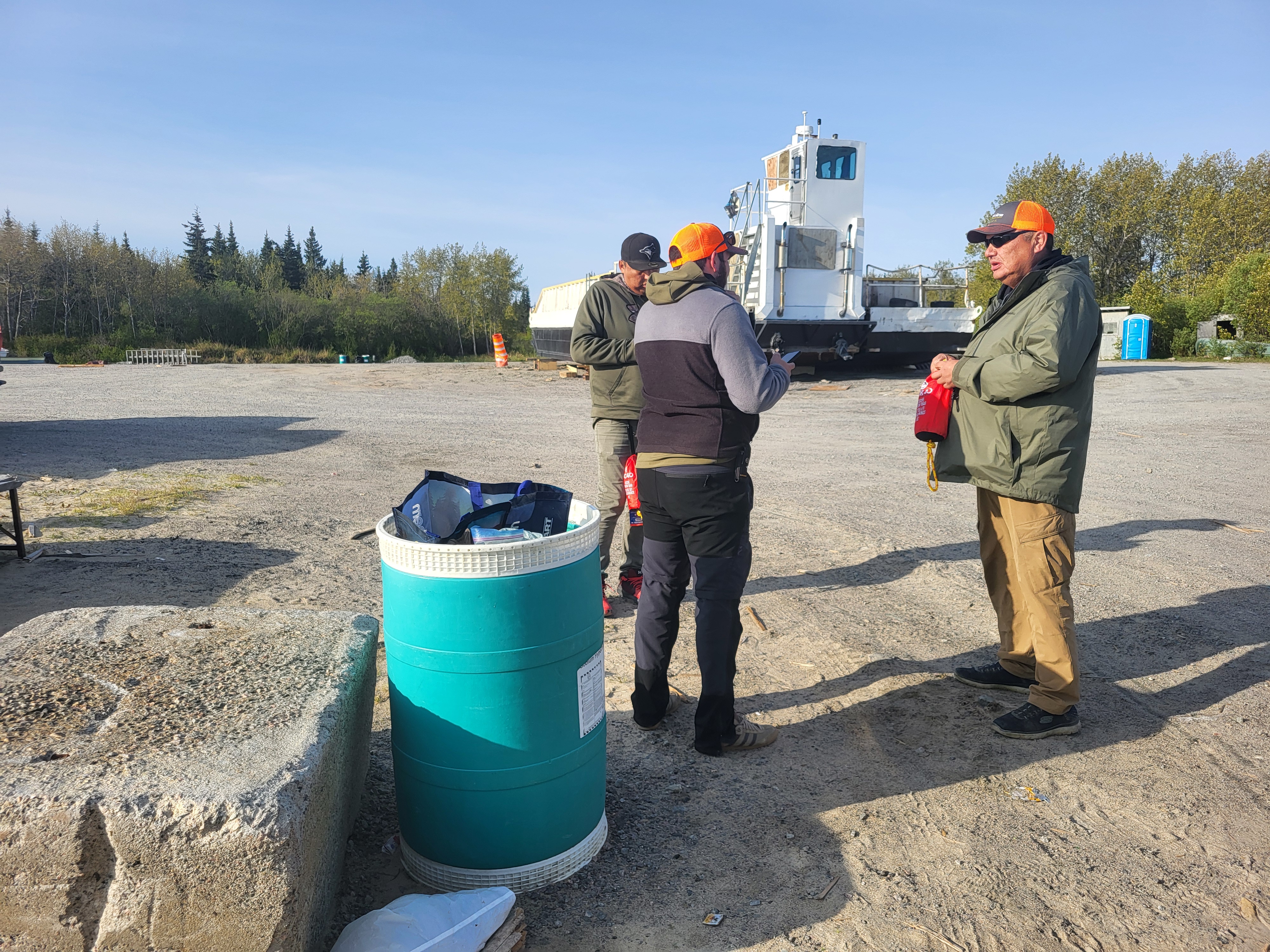
Field campaigns on water quality and salinity were conducted, where community members joined the team to collect samples. During conversations in the field and in workshops, Eeyou land users noted increased river flows since the Rupert diversion, which they associate with increased shoreline erosion, water cloudiness and woody debris in the Chisasibi (river), also known as the Grande Rivière.
Eeyou met during different activities, particularly in Chisasibi, have also reported environmental changes in the Chisasibi (river) estuary and surrounding coastal areas, particularly an increase in freshwater influence, decline in eelgrass beds, changes in wildlife and vegetation, and an observed reduction in salt levels in water.
Expected Changes
Estuary Sediment Movement
Since its construction, the La Grande hydroelectric complex has altered estuary and sediment movement. As no turbine upgrades are planned at La Grande-1, little to no change in flow conditions is expected within the estuary because of the capacity upgrades. As a result, sediment transport and shoreline erosion are expected to continue under conditions similar to those observed today.
Estuary Water Quality
The proposed capacity upgrades are expected to result in only slight changes to water quality in the Chisasibi (river) estuary. Changes to water salinity (the amount of salt in the water) would be much smaller than the natural changes caused by tides and seasonal water levels. Overall, studies show that the estuary would continue to function much as it does today, with no major changes expected to water quality or salinity.
Download the Sediment Movement and Water Quality Factsheet.
Only limited changes to estuary sediment movement and water quality are expected as a result of climate change. For more information, refer to the Climate Change Factsheet.

Merci pour votre contribution!
Aidez-nous à atteindre un plus grand nombre de personnes dans la communauté
Partagez-le avec votre famille et vos amis