
Cumulative effects study of wind power and electricity transmission infrastructure in the Bas-Saint-Laurent region
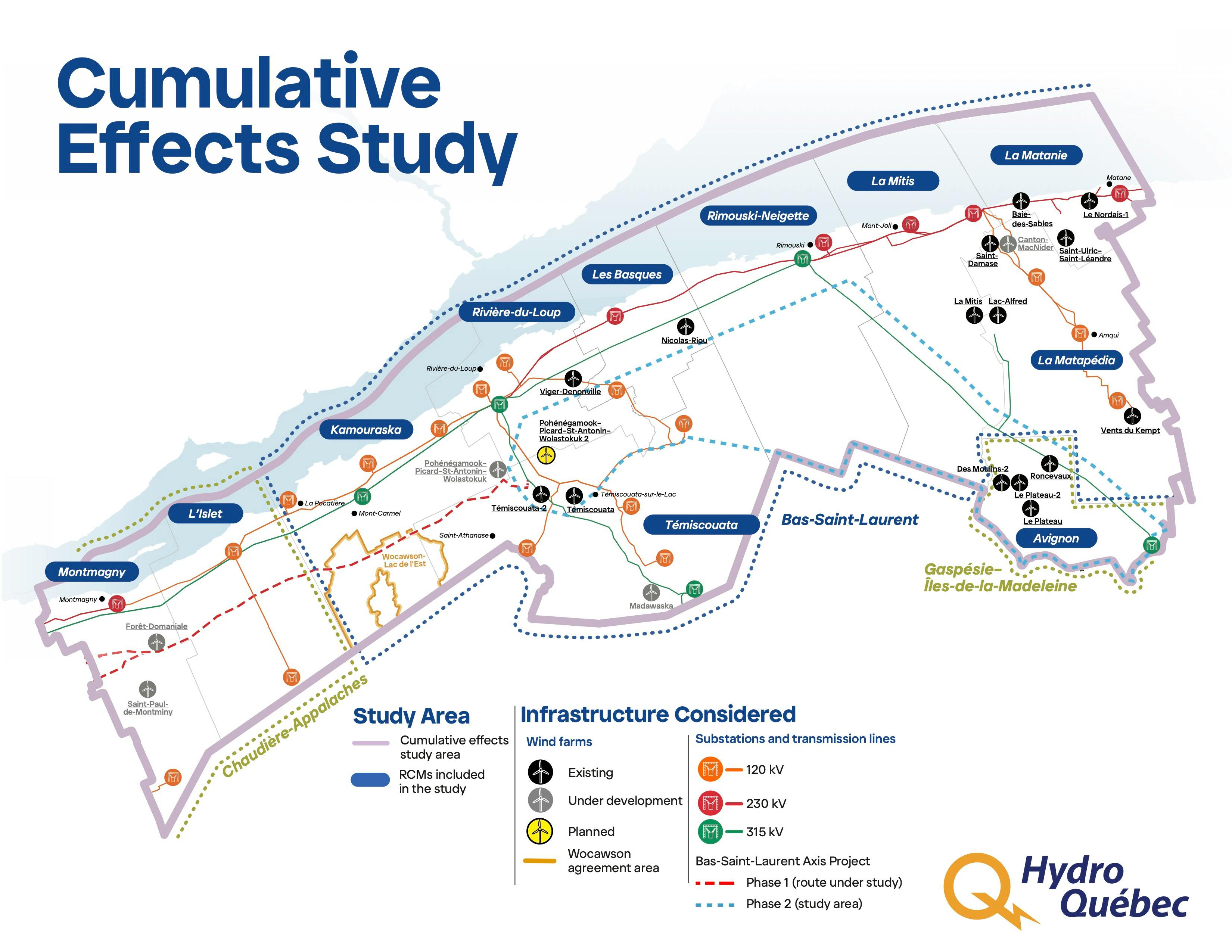
In fall 2026, Hydro-Québec launched a study of the cumulative effects of wind power and power transmission projects in the Bas-Saint-Laurent region, as well as in the adjacent Chaudière-Appalaches and Gaspésie MRCs.
Why assess cumulative effects?
There are several energy infrastructure facilities in the Bas-Saint-Laurent region, such as wind farms, transmission lines and substations. Other projects are currently being developed in the region. The effects of these infrastructure projects can accumulate across the area.
A cumulative effects assessment helps us understand how the impact of each project combines with that of the others. Such a study provides an overview and helps foster harmonious coexistence with the environment.
What is meant by "cumulative effects"?
A cumulative effect results from the combination of the effects of one project with those of other projects or activities, over time and space.
The study therefore focuses on effects that may accumulate, lead to indirect changes or interact with other effects to amplify them.
What infrastructure is covered in this study?
Existing wind farms
Wind farms currently under development, including Canton MacNider, PPAW 1 and 2, Madawaska, Forêt Domaniale and Saint-Paul-de-Montminy
The wind farms planned for the study area, particularly under the Wocawson, Wetsok and Gespe’gewa’gi agreements
Existing and proposed transmission lines and substations, including in the Appalaches–Bas-Saint-Laurent area
What is the purpose of this study?
Understand the cumulative effects of multiple energy projects on the same territory
Define mitigation measures tailored to the anticipated effects
Promote informed dialogue with local governments and First Nations
Survey: Your opinions, concerns and comments
Hydro-Québec is inviting residents and organizations in the area to complete an online questionnaire in order to gather information and better understand public concerns, the sectors to be considered and the perceived cumulative effects.
The information collected will contribute to the analysis of cumulative effects, the identification of mitigation measures and the development of recommendations.
Please fill out the questionnaire below.
Interactive map: your land use and concerns
This interactive map allows residents to document land use patterns as well as the locations of concerns and expected impacts associated with existing and proposed energy infrastructure.
The information gathered will contribute to the analysis of cumulative effects and enhance our understanding of local conditions.
We invite you to indicate, on the map, the locations, uses or issues that you believe are important to consider as part of the study.
Thank you for contributing to this collective discussion!
-
Complete the Questionnaire
Questionnaire on environmental and land-use factors to be considered in the assessment of the cumulative effects of energy projects in the Bas-Saint-Laurent region and its surroundings
Several energy projects have been developed or are planned in the Bas-Saint-Laurent region and its surrounding areas, including wind farms as well as power transmission lines and substations.
In this context, Hydro-Québec has begun a study of cumulative effects. This study aims to gain a better understanding of how all current and future activities and projects may affect the territory, natural environments, land uses, landscapes, and quality of life in the region.
This questionnaire, intended for the general public, is one of the sources of information that will be used in this study.
This questionnaire is designed to gather comments, expectations, and concerns regarding the impact of energy projects on the region (wind farms, transmission lines, and substations). These comments, expectations, and concerns from the general public will be taken into account in the cumulative effects study.
This study covers an area that includes the Bas-Saint-Laurent region, as well as the adjacent MRCs of Chaudière-Appalaches (Montmagny and L’Islet) and Gaspésie (Avignon).
The questionnaire takes 15 to 20 minutes to complete.
You have until January 31, 2027, to complete the questionnaire.
The results of this survey will be anonymized.
The document is divided into five (5) main sections:
- Relationship to the land
- Changes observed in connection with energy development in the region
- Concerns related to energy development in the region (current or future)
- Other elements to consider
- Contact information (optional)
We sincerely thank you for taking the time to respond to this survey. Your participation will help Hydro-Québec better understand the region and ensure that residents’ knowledge, concerns, and perspectives are taken into account in the cumulative effects study.
We also encourage you to contribute to the interactive map by indicating the locations, uses, or issues that you believe are important to consider as part of the study.
If you have any questions or would like assistance in completing this questionnaire, please email us at affairesregionales@hydroquebec.com


